Best Controller for ARPG Games in 2025 – Gamepad Picks Ranked
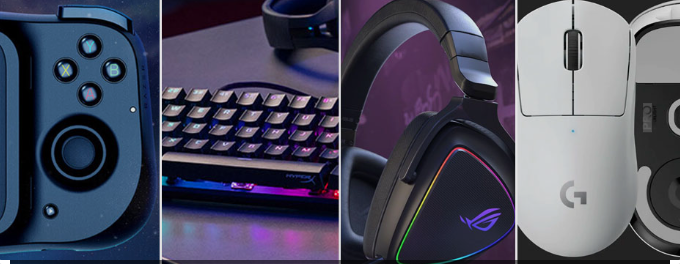
When you’re deep into an ARPG—whether you’re slaying demons in Diablo 4, crafting builds in Path of Exile 2, or exploring the campaign systems in Last Epoch—your gaming peripherals make the difference between a frustrating experience and complete immersion. While traditional gamepads have their place, the best controller for ARPG games extends far beyond a single controller. It’s an entire ecosystem of peripherals: a responsive mouse for precise ability targeting, a keyboard with dependable inputs for hotkeys and movement, a headset for audio cues, and a monitor that doesn’t leave you missing critical moments. This comprehensive guide to the best controller for ARPG games covers the entire gaming setup you need to dominate any action RPG.

Why ARPG Peripherals Matter More Than Console Gamepads
Action RPGs demand precision, speed, and comfort during marathon gaming sessions. Unlike turn-based RPGs, ARPGs require split-second reactions: dodging incoming attacks, triggering defensive abilities, managing hotbars, and executing complex ability rotations. A traditional gamepad can handle basic movement and button presses, but serious ARPG players discover that a mouse-and-keyboard combination—enhanced with quality gaming peripherals—provides superior control precision and accessibility to complex abilities.
Most competitive ARPG players on PC use mice and keyboards rather than controllers because they enable:
- Instant, precise ability targeting (crucial for positioning skills)
- Access to 12+ hotbar slots without awkward chord combinations
- Faster camera control for awareness in chaotic combat
- Better support for complex builds with multiple ability interactions
- Ergonomic advantages during 4-8 hour play sessions
This guide focuses on the peripheral stack that serious ARPG players use: gaming mice, mechanical keyboards, quality headsets, and high-refresh monitors. Together, these components create the best controller for ARPG games setup.

Gaming Mouse: The Foundation of ARPG Control
Your mouse is your primary input device for ARPG gameplay. It handles ability targeting, movement, camera control, and precise interactions. The right gaming mouse elevates your gameplay dramatically.
Professional-Grade Option: The 👉 Logitech G502 X PLUS Wireless Gaming Mouse is the gold standard for ARPG players. Its ergonomic right-hand design fits naturally during long play sessions, customizable buttons enable quick ability access, and the LIGHTSPEED wireless technology delivers zero-lag performance. Many professional ARPG streamers use this mouse specifically because it handles rapid input sequences without missing commands.
Aggressive Alternative: For players preferring a lightweight, speed-focused design, the 👉 Razer DeathAdder V3 Ergonomic Gaming Mouse delivers quick flick accuracy and responsive clicks. Its contoured design supports extended gaming sessions without hand fatigue. The ultra-responsive switch makes this ideal for fast-paced ARPG combat where milliseconds matter.
Pro Esports Pick: Competitive ARPG players often choose the 👉 Razer Viper V3 Pro Wireless Gaming Mouse for its ultra-lightweight design and tournament-grade responsiveness. At just 63 grams, it reduces hand strain during intense 12-hour farming sessions. The wireless reliability is tournament-proven across competitive gaming.
MMO-Focused Option: If your ARPG uses extensive hotbars (like Path of Exile or Last Epoch), the 👉 Corsair SCIMITAR ELITE Wireless MMO Gaming Mouse provides 12 side buttons for ability macros. This eliminates the need to constantly reach for keyboard hotkeys, keeping your hand on the mouse for continuous ability execution.
Lightweight Esports Alternative: The 👉 Logitech G PRO X SUPERLIGHT 2 Wireless Gaming Mouse weighs just 60 grams and is trusted by esports professionals across multiple games. Its shape suits both claw and palm grip styles, making it adaptable for different ARPG play preferences.

Mechanical Keyboard: Reliable Input for Complex Rotations
Your keyboard handles movement (WASD), ability hotkeys, and utility functions (inventory, maps, social systems). A quality mechanical keyboard ensures every keypress registers reliably, even during intense button mashing.
Premium Option: The 👉 Corsair K70 MAX RGB Mechanical Gaming Keyboard features premium switches, macro support for complex ability sequences, and programmable RGB lighting that matches your game mood. The detachable USB-C cable keeps your desk clean, and the aluminum frame provides durability for years of gaming.
Razer Flagship Option: The 👉 Razer Huntsman V2 Gaming Keyboard uses optical switches for ultra-fast actuation—perfect for ARPGs where split-second ability execution matters. The full-size layout ensures you have enough keys for comprehensive hotbar setup without awkward key combinations.
Compact Alternative: The 👉 Razer Ornata V3 TKL Gaming Keyboard offers tenkeyless design (compact without sacrificing function keys) and hybrid mechanical switches that deliver responsive clicks. TKL keyboards take up less desk space, allowing room for a larger mousepad—crucial for ARPG mouse control.
Gaming Headset: Audio Cues and Spatial Awareness
ARPGs rely heavily on audio cues: enemy ability tells, item drop notifications, and ambient danger warnings. A quality gaming headset with positional audio gives you competitive advantage and immersion.
Premium Wireless Option: The 👉 SteelSeries Arctis Nova 7 Wireless Gaming Headset provides crystal-clear audio with exceptional spatial awareness. The wireless connection removes cable clutter, and the boom mic ensures team communication if you play multiplayer ARPGs. The comfort design supports 8-hour+ gaming sessions without discomfort.
Budget Wireless Option: The 👉 HyperX Cloud III Wireless Gaming Headset delivers solid audio quality at a lower price point. The virtual surround sound helps you detect enemy positions in ARPGs, and the lightweight design reduces neck strain during long sessions. The USB-C charging means no AA batteries to manage.
Monitor: Visual Fidelity and Reaction Time
Your monitor determines how clearly you see ARPG content and how quickly you react. High refresh rates and low latency are valuable, but so is visual fidelity for appreciating detailed ARPG environments.
Balanced QHD Option: The 👉 LG 27GP850-B 27-Inch QHD Gaming Monitor delivers 144Hz refresh rate at 1440p resolution, striking a balance between visual clarity and reaction speed. Most ARPG players find 1440p sufficient without the performance demands of 4K, and 144Hz is smooth for fast-paced combat.
Premium 4K Option: The 👉 ASUS ROG Swift PG27AQDM 27-Inch OLED Gaming Monitor offers 360Hz refresh rate with OLED panel technology—meaning exceptional color accuracy and deep blacks that make dark ARPG environments visually stunning. At 1440p, it balances visual fidelity with refresh rate performance. The fast response time keeps motion crisp during intense combat.
Customization and Optimization for ARPG Gameplay
Once you have your core peripherals, optimization amplifies their effectiveness and transforms good gear into a system that feels like an extension of your gameplay:
Macro Programming: Most gaming mice and keyboards support programmable buttons. Create macros for ability rotations specific to your ARPG class. A single button press can trigger a complex sequence—invaluable during boss fights with tight timing windows. For example, mapping a defensive cooldown rotation to one key lets you execute multi-step protection instantly when danger emerges. Document your macros with labels so you remember what each button does after weeks of gameplay.
Monitor Settings Optimization: Disable motion blur, enable fast response modes, and calibrate brightness for your specific room lighting. In ARPGs, clarity matters infinitely more than flashy visual effects. A crisp, responsive image helps you spot enemy abilities before they’re cast, giving you precious milliseconds to react. Lower your in-game gamma slightly to make dark environments visually distinguishable without losing atmospheric immersion.
Sensitivity Balance: Most ARPG players prefer mouse sensitivity between 800-2400 DPI with in-game sensitivity adjustments. Test your preference—too high causes twitchy, uncontrolled aiming, too low makes camera control sluggish and fatiguing over long sessions. Finding your sweet spot transforms control precision dramatically. Spend an hour testing different DPI values; this single adjustment often improves gameplay more than expensive hardware upgrades.
RGB Lighting Customization: While not gameplay-critical, matching RGB lighting across mouse, keyboard, and headset creates a cohesive visual setup that psychological studies show slightly improves focus and comfort. Set lighting to match your game’s color palette or your personal aesthetic. Many players find dim, warm lighting (orange/amber) more comfortable during long evening gaming sessions than bright blue.

Ergonomics for Extended ARPG Sessions
ARPGs encourage marathon play sessions. Extended gaming without proper ergonomics causes repetitive strain injuries and fatigue:
Posture Setup: Position your monitor 20-26 inches away with the top at eye level. Your keyboard and mouse should be positioned so your elbows remain at 90 degrees. Your wrist should be neutral (not bent up or down), with the mouse pad starting where your keyboard ends.
Break Rhythm: Every 60-90 minutes, stand and move for 5 minutes. This prevents the stagnation that causes lower back pain and restores circulation to your hands. Even brief movement breaks significantly improve long-session comfort.
Wrist Support: Use a wrist rest under your keyboard and mouse pad to prevent carpal tunnel issues from hours of clicking and typing. Gel-based wrist supports distribute pressure more comfortably than firm plastic.
Lighting and Eye Care: Ensure your desk has adequate ambient lighting alongside monitor light. Use the 20-20-20 rule: every 20 minutes, look at something 20 feet away for 20 seconds to rest your eyes. This prevents the eye strain that leads to afternoon energy crashes.
Building Your ARPG Gaming Setup on Budget
You don’t need every premium peripheral to enjoy ARPGs. Prioritize strategically:
Tier 1 (Essential) – $150-250: A reliable gaming mouse ($60-80), mechanical keyboard ($80-120). These two peripherals make the biggest gameplay difference.
Tier 2 (Highly Recommended) – $150-300: Quality headset ($100-150), monitor upgrade ($200+). Audio cues matter in ARPGs, and a good monitor improves both reaction time and visual appreciation.
Tier 3 (Nice to Have) – $100-200: RGB lighting upgrades, desk pad, cable management, ergonomic accessories.
Start with Tier 1 and upgrade as budget allows. A $150 gaming mouse dramatically improves ARPG gameplay; a $250 keyboard is less critical than a $100 quality mouse.
Frequently Asked Questions About ARPG Gaming Peripherals
Should I use a controller or mouse/keyboard for ARPG games?
For action RPGs on PC, mouse and keyboard provides superior control precision and ability access. Traditional gamepads are valid for console ARPGs but PC ARPG players almost universally prefer mouse/keyboard for the ability to target abilities precisely, access 12+ hotbar slots, and maintain faster camera control. Try both and see which feels natural, but most serious ARPG players gravitate toward mouse/keyboard within weeks.
What DPI should I use for ARPG gaming?
Most ARPG players use 800-2400 DPI depending on mousepad size and personal preference. Larger mousepads support lower DPI (800-1200) for smoother, more controlled movements. Smaller mousepads require higher DPI (1600-2400) for adequate cursor range. Start at 1600 DPI and adjust based on feel—sensitivity is extremely personal.
How many buttons do I really need on a gaming mouse?
2-3 side buttons are standard and sufficient for most ARPG abilities through hotbar cycling. MMO-style mice with 12 side buttons offer convenience if your ARPG has extensive hotbars, but many players find standard 2-button mice adequate with proper hotbar setup and modifier keys.
Do I need a gaming-specific headset for ARPGs?
Not exclusively, but a gaming headset with clear audio and positional sound improves the ARPG experience. You’ll hear enemy ability tells earlier, detect item drops you might miss with weak speakers, and catch ambient audio cues that warn of danger. A $100-150 gaming headset is worthwhile if you play 10+ hours weekly.
What monitor refresh rate do I need for ARPGs?
144Hz is more than sufficient for ARPG gameplay. While competitive FPS games benefit from 240Hz+ monitors, ARPGs are less latency-sensitive. 144Hz provides smooth motion and quick response without the performance demands of higher refresh rates. 60Hz is playable but feels noticeably sluggish by comparison.
Choosing Your ARPG Peripheral Setup
The best controller for ARPG games isn’t a single gamepad—it’s a carefully chosen combination of mouse, keyboard, headset, and monitor optimized for the fast-paced, ability-heavy gameplay ARPGs demand. Whether you’re exploring dark forests in Diablo 4, running endgame maps in Path of Exile 2, or grinding campaign content in Last Epoch, these peripherals create the precision, comfort, and awareness you need to enjoy hundreds of hours of gameplay.
Start with a quality gaming mouse and keyboard—these make the most immediate impact on your ARPG experience. Add a good headset for audio cues, upgrade your monitor for visual clarity, and ensure ergonomic setup for comfort during long sessions. Over time, you’ll develop preference for specific mouse sensitivity, keyboard feel, and audio profile. Let those preferences guide your future upgrades.
For deeper ARPG recommendations, explore our comprehensive guides: the best ARPG games on PC to choose your next adventure, our guide to the best gaming mouse for ARPG, coverage of the best gaming keyboard for ARPG, and our extensive best gaming monitor for ARPG reviews. Your peripheral setup directly impacts your enjoyment and performance in ARPGs—choose wisely and game confidently.
Leave a Reply